How to reduce the technical, operational and economic risk of a new machine tool, thanks to the Industrial Serenity Method
A company looking for a new machine tool, or needing to replace a production line, often struggles to find what it needs. The choice gets complicated, slows down, sometimes stalls.
In fact, manufacturers’ standard models often don’t match the individual processes of plants, which are all different, or they arrive in production as catalog variants with a few modifications. This is where the limits emerge: the company adapts to the machine, and unexpected costs pile up.
That’s what a custom machine is for: the design starts from the customer’s needs, never from a catalog. It’s the machine’s ergonomics that “creates” the savings. This is how hidden costs, surprises and production downtime are avoided, all of them avoidable.
Technical, operational and economic risks are kept to a minimum, while payments follow the progress of the build. Testing is then completed before delivery to the plant, and is never at the customer’s expense.
The success of the approach lies in anticipation: the process is clarified before the machine is designed, and the customer verifies progress before delivery.
Table of contents
When a machine tool doesn't support the process- Process first, then the machine
- Machine tool design and delivery: controlled progress and testing
- After delivery: proven productivity and long-term support
- Total Custom and Industrial Serenity: two ideas, one approach
When a machine tool doesn’t support the process
For a plant manager, a production manager, a technical department or an entrepreneur, choosing a machine tool that isn’t a perfect fit for the plant has concrete consequences. These problems are hard to recover from, because in effect the new machine creates a process instead of supporting an existing one.
The consequences concentrate in three areas:
- higher costs. Existing machines and lines come with spaces, access points, columns, and every kind of safety and maintenance constraint. A machine that doesn’t fit into this context increases operating costs;
- slower production. A machine that needs maintenance affects the entire cycle, losing productivity and, in some cases, margin;
- inadequate performance and KPIs: renewing the machine fleet and adding new machines doesn’t show adequate efficiency gains.
Even a choice that stands still has a cost. When the technical department’s questions get no concrete answers, the decision stalls, and in the meantime inefficiency keeps eroding margins.
In short, you work worse and at much higher costs. Let’s see how the Industrial Serenity Method addresses these risks, phase by phase.
Process first, then the machine
The first three phases take place before a drawing or a draft design of the machine even exists. They serve to establish what the machine must do, where it will be installed and with what specifications it will work.
Immersion in the production process
NG Tech enters the customer’s production process, and very often physically visits the plant where the machine will be put into operation. It listens to the entrepreneur, the head of production, the technical staff and those who will use the machine tool, or the line, every day.
Immersion in the process serves to understand the big picture: it means gathering information that isn’t on the plant floor plan. It also shows how the machine will fit into the spaces and how operators will work with it.
The goal is to establish what needs to improve.
Detailed end-to-end analysis
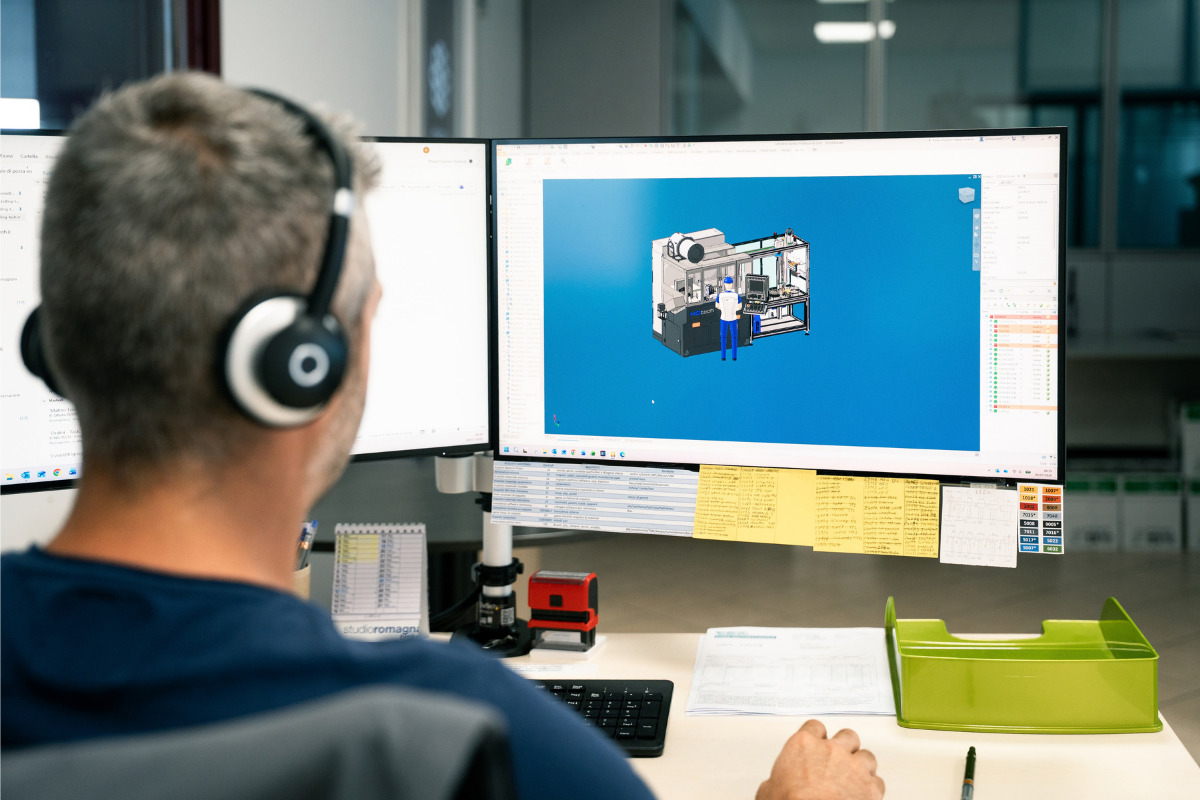
The analysis covers production needs, bottlenecks, technical constraints, space, safety, maintenance and integration with existing lines. It ends with a decision on the type of solution: improving an existing standard, or genuine Total Custom.
By Total Custom we mean a machine conceived for that specific process, without resorting to pre-assembled solutions or catalog items.
Informed, participatory co-design
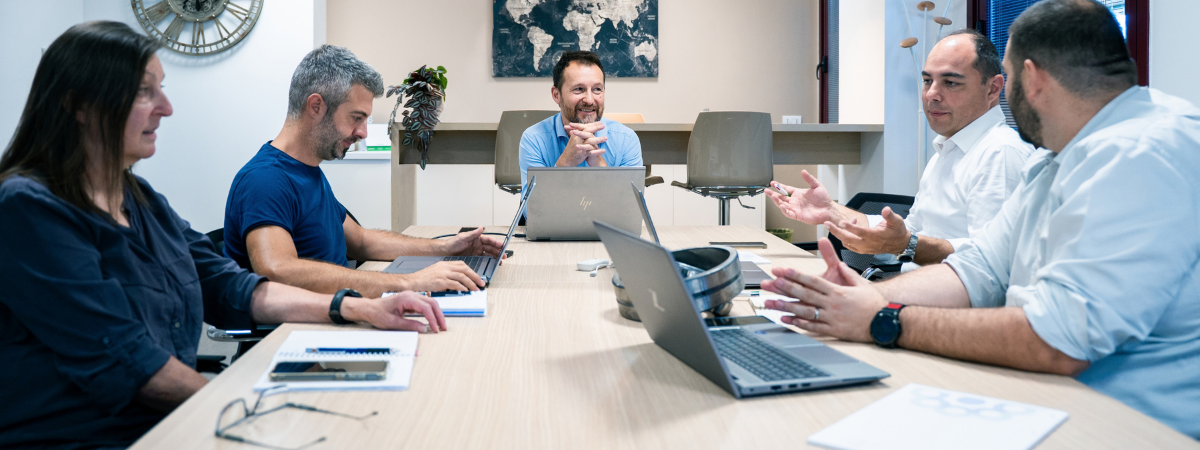
The customer co-develops the project based on their own technical specifications, drawings, the degree of automation required, the ergonomics needed and possibilities for future development.
This dialogue means every specification is validated with the technical and production managers, and approved before proceeding. This way, the new machine’s “technical weight” is shared, and decisions made together eliminate any operational ambiguity.
Machine tool design and delivery: controlled progress and testing
Building machines and production lines “around customers’ needs” also, and above all, means making costs follow results.
Moreover, as a result of participatory design, we want the new machine to reach the customer already perfectly tested, so that it’s operational right away, as soon as it’s delivered.
Payments and project development
The financial path follows the actual progress of the project: payments are scheduled and tied to completed phases. The customer sees each phase completed and assigns value to what has been done.
They know what stage the project is at and what they’re paying for, so the work done and the investment stay aligned with the initial intent throughout the project.
Turnkey engineering
The engineering is turnkey: a new machine tool must be usable, and controllable, even by non-specialized workers.
For this reason we always oversee assembly, automation and final fine-tuning, backed by a testing phase that the customer never has to bear.
Pre-delivery testing
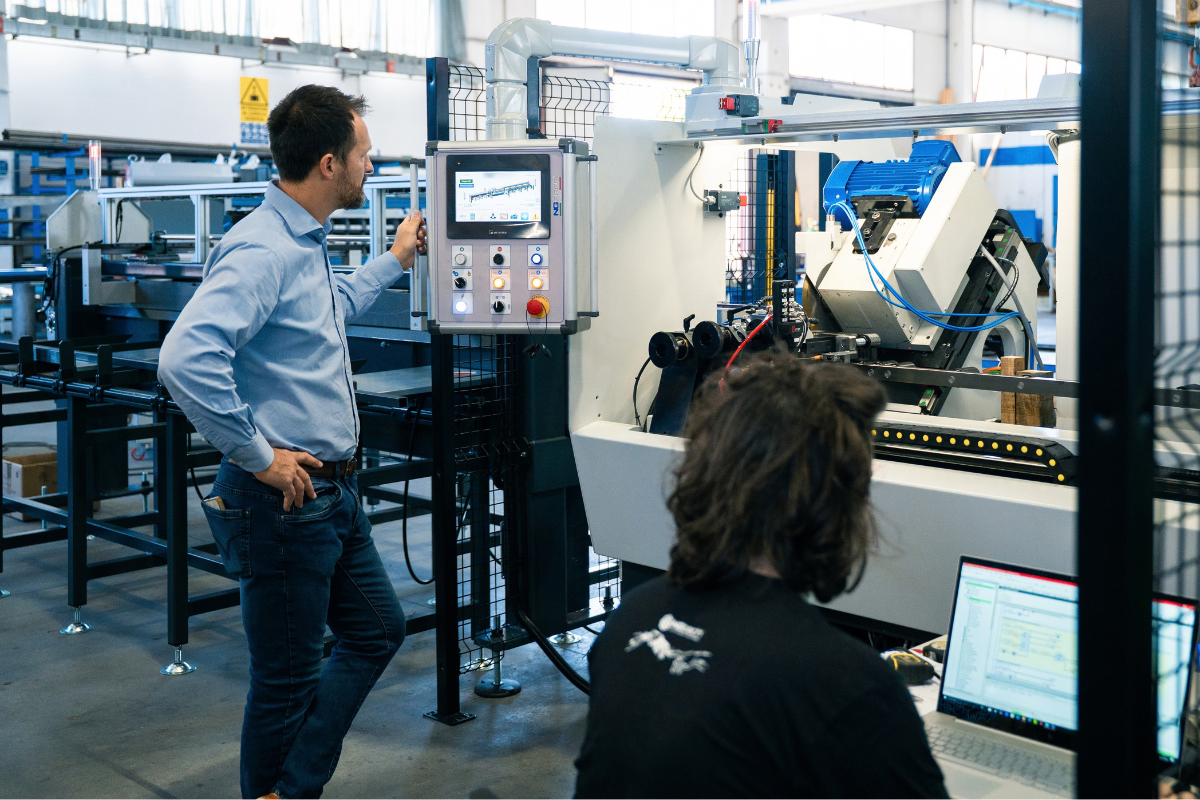
Before delivery, every machine tool undergoes complete internal testing.
Testing verifies mechanical operation, operating cycles, safety systems and consistency with the agreed specifications. The problems of a new machine often emerge after installation, at the plant, even months later, when operators have already learned to use it and the investment has already been paid for.
Testing is completed before the machine enters the production process, and the machine arrives at the plant already tested and working.
After delivery: proven productivity and long-term support
Productivity proof
A custom machine makes sense if it improves the production process, so every project is tied to concrete results.
NG Tech measures the results: capacity, bottlenecks, repeatability and reliability. The machine is evaluated on what it was built for.
Long-term technical support
Industrial Serenity is built before the purchase, but it doesn’t end with delivery.
A method made of immersion in the process, requirements analysis, co-design and on-demand construction, plus a complete internal test, can’t do without measuring productivity, repeatability and reliability.
Technical support, in fact, accompanies the machine over time, with support and updates both directly and through remote diagnostics.
Total Custom and Industrial Serenity: two values that create
Total Custom and Industrial Serenity are two values around which NG Tech has renewed its brand identity.
Total Custom reverses the starting point: the machine is designed around the customer’s specific needs, available space, automation logic and production goals, without necessarily starting from a catalog model.
Industrial Serenity is nothing other than the result of this approach: control over the process, operational continuity, risks reduced to a minimum and better working conditions throughout the life of the machine.